- Home
- About Us
- Background
- Mandate
- Cubango Okavango River Basin
- Governance
- Strategy and Approach
- Member States
- Our Work
- Partners
- Climate Resilient Infrastructure Development Facility (CRIDF)
- European Union (EU)
- Southern African Development Community (SADC)
- Swedish International Development Cooperation Agency (SIDA)
- The World Bank (WB)
- United Nations Development Programme (UNDP)
- United States Agency For International Development (USAID)
- Resources
- News and Events
- Opportunities
- Contact Us
- FAQ's
- Connect With Us
- i
- t
- f


Resilient Waters Programe Holds Transboundary Fisheries Management Consultations
Thursday, September 17, 2020
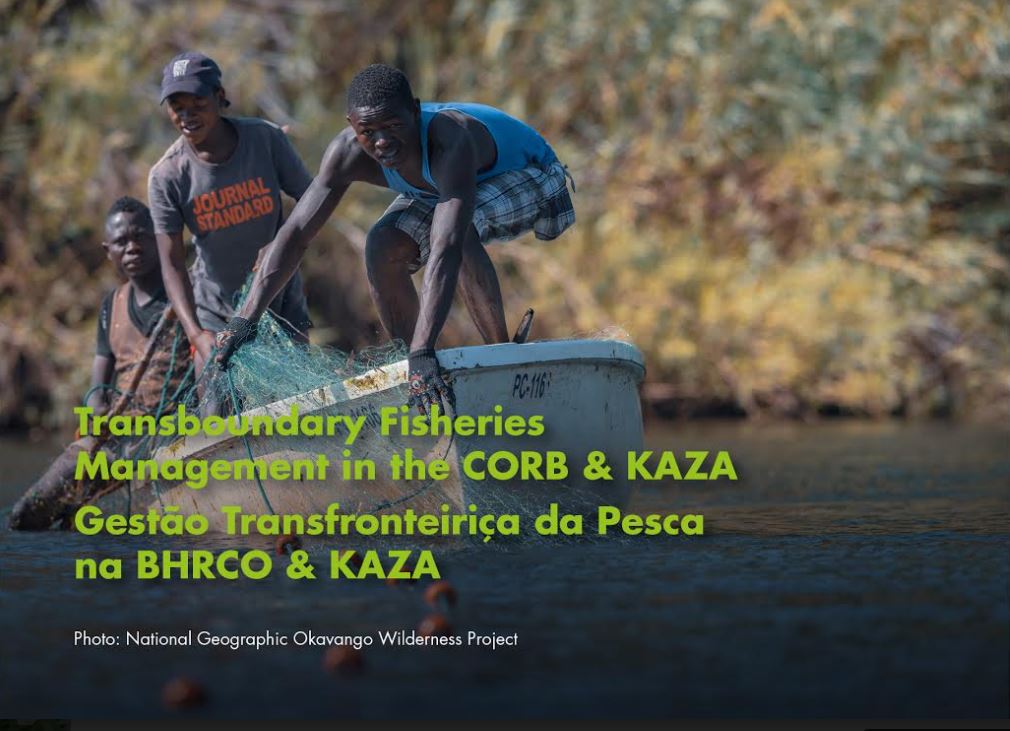
The Transboundary Fisheries Management Plan for the Cubango-Okavango River Basin (CORB) was formulated under the auspices of the Joint Permanent Commission of Cooperation (JPCC) between Botswana and Namibia. With the aim of establishing a joint fisheries monitoring system between the two countries that will ensure the conservation and sustainable use of shared fisheries resources of the CORB, for the benefit of local communities of the Basin. This was in realization of the fact that the fish resources of a shared river system cannot be managed by a single riparian state. The scope of participation was further expanded to include Angola during implementation phase as the flood waters originate in Angola, hence whatever happens in Angola has a direct impact on the downstream.
The Transboundary Fisheries Management Plan, therefore, came up with a number of activities that are to be implemented jointly by the three participating countries of Angola Botswana and Namibia. Southern African Regional Environmental Programme (SAREP) funded meetings and facilitated the formulation of the management plan. The Management Plan, provides a foundation for the responsible co-management of shared fish stocks between Angola, Botswana and Namibia, in the Basin. The Management Plan also contributes towards the national capacity of Angola, Botswana and Namibia to better conserve and manage the fisheries resources of the CORB. The plan will facilitate the greater participation of fishing communities in the management of the resources upon which they largely depend on for food security and as a means of income generation. Overall the plan looks at the sustainable development of freshwater fisheries sector in all three countries. The Management Plan can further act as a catalyst for improving cooperation in the management and development of the river with other riparian states that share the resources of the Okavango/Zambezi system, including, Zambia and Zimbabwe.
Through the USAID Resilient Waters Program, a series of stakeholder consultations will engage OKACOM, KAZA, UNDP, Fisheries Departments of the Governments of Angola Botswana and Namibia and other stakeholders involved in fisheries in the Cubango-Okavango Basin. The first of these meetings was a preliminary planning meeting held in Gaborone on 7 December 2019 and due to Covid-19 pandemic, a follow up meeting planned for Kasane could not take place. A virtual workshop was organised to determine status of fisheries management and transboundary fisheries coordination within the Cubango-Okavango River Basin and KAZA landscape. The workshop which took place on 17 September 2020, brought together various stakeholders to further look into the identifying gaps, challenges and priorities and map a way forward.
subscribe for news notification by email
Photo Credit: Kostatin Luchansky, National Geographic, Okavango Wilderness Project.


